


When the World's #1 Engineering University Meets 30 Years of Battery Experience-SCUD Power × Tsinghua: Advancing the Next Generation of Battery Safety


SHARE
SHARE

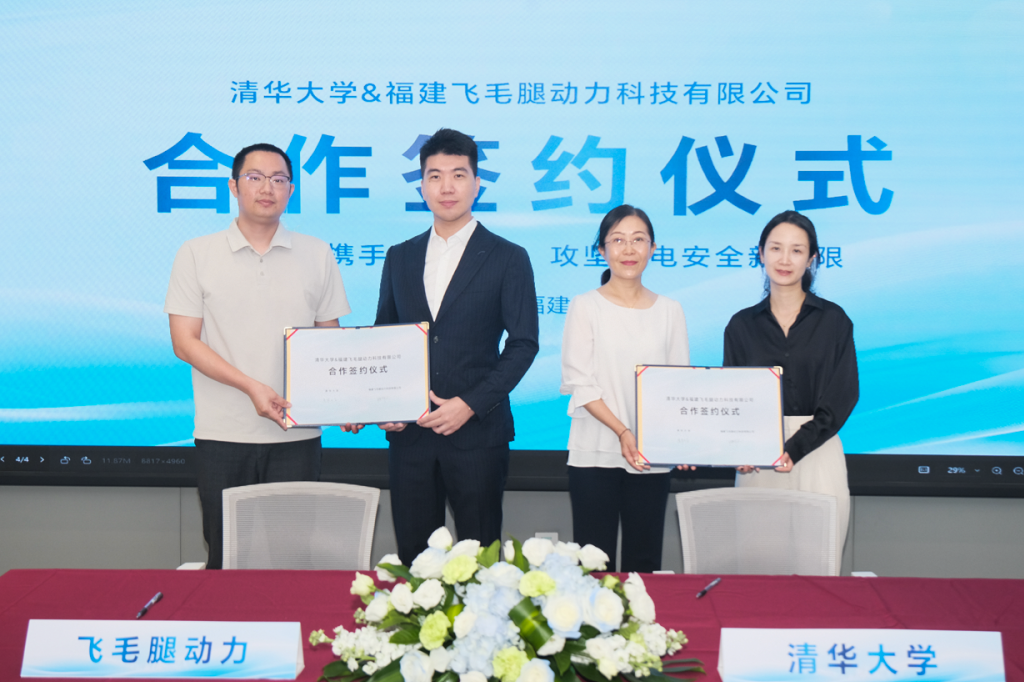
Battery safety is not a finish line. It is an engineering challenge that keeps moving forward.
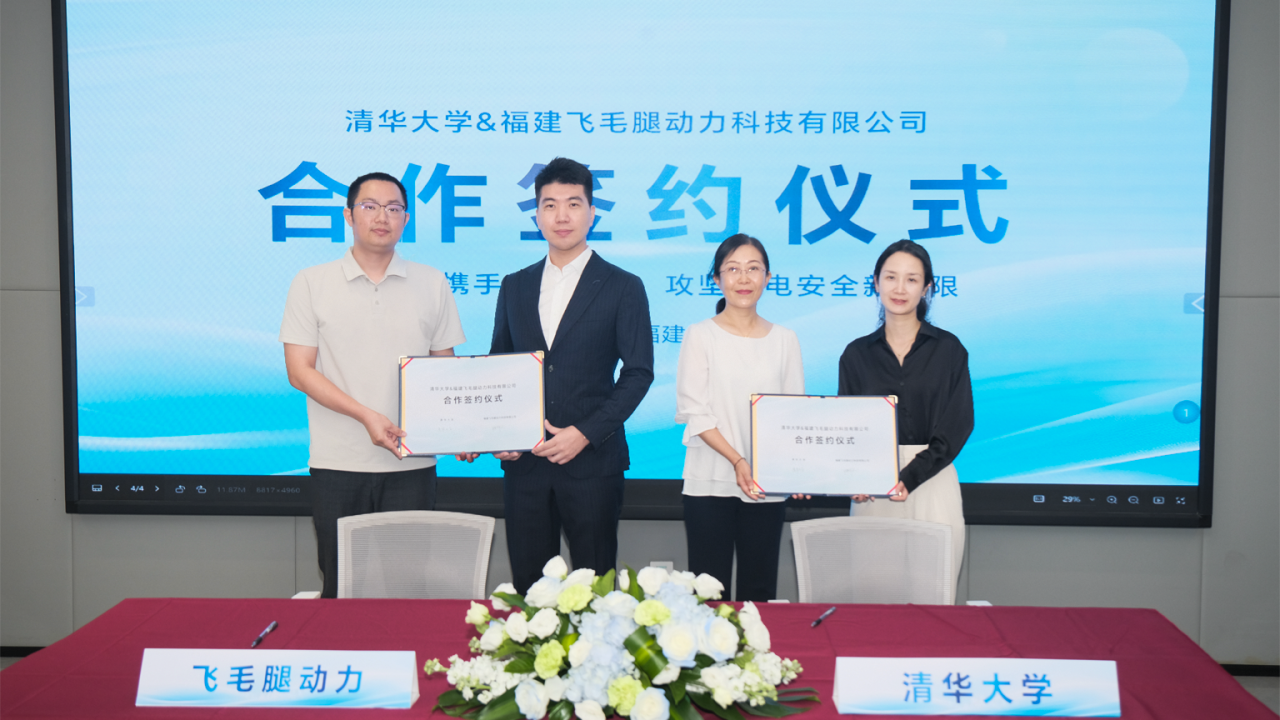
On September 9, 2026, SCUD Power and Tsinghua University officially signed a cooperation agreement in Fuzhou, China, launching a dedicated project focused on high-safety battery pack design and the industrialization of key battery safety models.
The collaboration will focus on three key areas:
• Thermal runaway prevention
• Early warning of advanced thermal runaway
• High-accuracy State of Health (SOH) estimation
For SCUD Power, this is far beyond an academic collaboration.
It is about bringing advanced battery science closer to the products and applications that customers rely on every day.
Why Battery Safety Matters
As lithium batteries become more powerful, energy-dense and widely used across micro-mobility, robotics, consumer electronics and energy storage, battery safety is becoming a more complex engineering challenge.
Higher energy density and greater power output bring new possibilities—but also place greater demands on cell stability, thermal management, BMS protection, monitoring and system-level protection.
One of the most critical challenges is thermal runaway prevention. A battery safety event can begin with an abnormality inside a battery cell, but without timely detection and effective protection, it may escalate and propagate across the battery system.
That is why battery safety cannot rely on a single protection mechanism.
A safer battery system needs to understand battery behavior, detect risks earlier, contain failures more effectively and accurately assess battery health throughout its lifecycle.
For SCUD Power, this means moving beyond simply responding to problems. It means continuously improving our ability to predict, prevent and control battery safety risks.
Why the Relationship Between SCUD Power andTsinghua University Matters
This challenge requires expertise from both fundamental battery research and real-world system engineering.
Researcher Professor Xiangming He and his research team at Tsinghua University have spent nearly 30 years researching lithium-ion batteries and key battery materials, including internal cell failure mechanisms and thermally triggered cascading reactions. Such breakthroughs are not isolated. In the U.S. News 2026-2027 global university rankings for engineering, Tsinghua University was ranked No. 1 in the world, a result that reflects the depth and consistency of its engineering research.
SCUD Power brings extensive experience in battery pack engineering and commercialization. As a core subsidiary of the SCUD Group, which has a 30-year brand history, SCUD Power develops customized lithium battery solutions for applications including AI-powered robotics, shared mobility, floor-care appliances, consumer electronics and energy storage.
The company has a strong R&D team consisting of nearly 300 members, covering BMS, electrical and mechanical design, firmware and algorithms, testing and engineering services, and has accumulated more than 600 invention and utility model patents, including nearly 70 related to thermal management and thermal runaway prevention.
Together, these capabilities create a strong bridge between battery science and battery engineering. Tsinghua brings long-term research into battery materials and safety, and SCUD Power brings the engineering and commercialization experience needed to turn those findings into practical, manufacturable products. In other words, the collaboration links discovery with deployment, and research with real-world application.
What Challenges We Are Addressing
The joint project will focus on thermal runaway prevention, advanced early warning and high-accuracy SOH estimation.
These areas are closely connected.
A smarter battery system needs to do more than respond after something goes wrong. It needs to recognize abnormal behavior earlier, understand changing battery conditions and support more effective protection strategies.
Achieving this requires the integration of battery modelling, algorithms, BMS, thermal management and system-level design.
As Dr. Wang Li , Deputy Director, Associate Researcher and PhD Advisor at the New Energy and Materials Chemistry Laboratory and a core member of Professor He’s team, noted, the project will also focus on improving passive safety, enhancing state-estimation accuracy and accelerating the commercialization of research outcomes.
How Research Meets Engineering
For SCUD Power, the real value of this collaboration lies in turning research into technologies that work in real battery systems.
Scientific research can help us better understand why failures occur and how battery behavior evolves. Engineering then turns that knowledge into practical solutions through battery architecture, BMS strategies, thermal management, mechanical design and validation.
This is where we believe meaningful battery innovation happens:
Deep research meets real-world engineering.
What This Means for the Future
Battery safety requirements are becoming increasingly demanding across global markets.
Meeting current requirements is essential—but for an engineering company, it should not be the end goal.
The next step is to understand where battery safety can go beyond today’s benchmarks.
Through this collaboration, SCUD Power and Tsinghua University will explore new possibilities in battery protection, prediction and health assessment, with the aim of raising the bar for high-safety battery pack design.
Because when it comes to lithium battery safety, there is always another level to reach.
From the Lab to the Road. From Research to Reality.
We look forward to turning this collaboration into technologies that make a real difference in the battery systems of tomorrow.



When the World's #1 Engineering University Meets 30 Years of Battery Experience-SCUD Power × Tsinghua: Advancing the Next Generation of Battery Safety