Custom or Standard Battery Packs? A Decision Guide for OEMs


SHARE
SHARE

Custom or Standard Battery Packs? A Decision Guide for OEMs
Choosing between custom battery packs and a catalog pack is one of the earliest decisions in a hardware project, and one of the hardest to reverse. Pick wrong, and original equipment manufacturers (OEMs) either redesign an enclosure around a cell layout that never fit or pay for engineering the product did not need.
What Is the Real Difference Between Custom and Standard Battery Packs?
A standard pack is designed once for many products. Because a catalog pack must suit many buyers, its shape, voltage, capacity and battery management system (BMS) are fixed. Your product adapts to the pack.
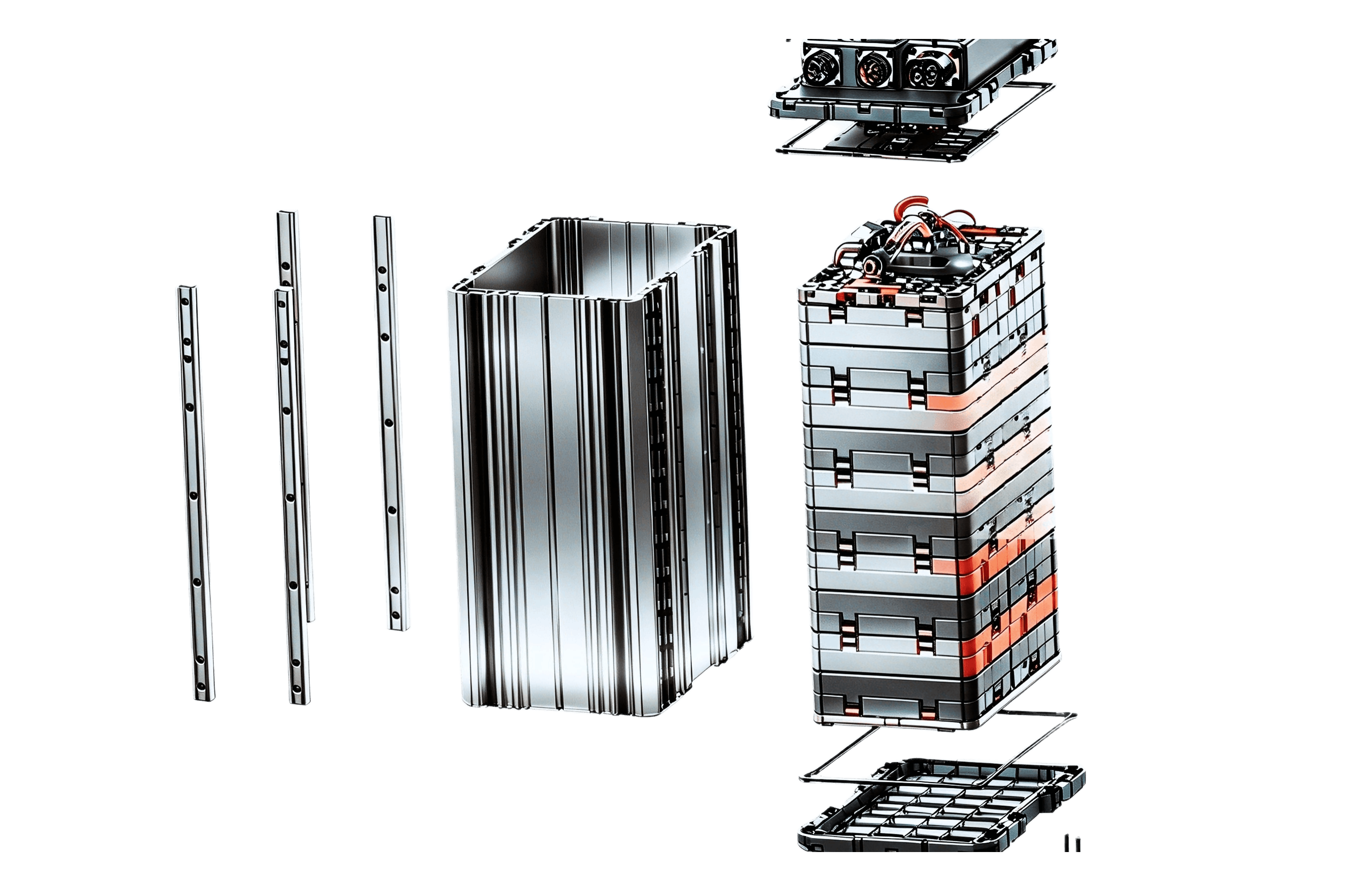
With custom battery packs, the direction reverses. A custom pack becomes more attractive when a device needs a specific shape, connector, voltage, capacity, current capability, BMS or certification pathway.
Design question | Standard pack | Custom battery pack |
Shape and size | Fixed by the catalog | Drawn from your available space |
Voltage, capacity, current | Closest catalog match | Specified to your load |
BMS | Preset protection behavior | Configured to your requirements |
Certification path | Whatever the pack already carries | Planned for your target markets |
What Does "Standard" Actually Mean for an OEM?
Standard means a catalog pack you buy as-is, so the fit becomes your integration problem. For example, a cordless vacuum with a curved handle cavity cannot take a rectangular pack without wasting internal space. As a result, the industrial design bends around the battery.
Standard packs still have a practical role in rapid prototyping, replacement applications, low-volume projects, and products whose electrical and mechanical requirements already match an existing pack.
When Should an OEM Choose Custom Battery Packs?
Choose custom when no catalog option meets your product's shape, power or safety requirements. Three triggers show up most often:
• Irregular space: the pack must follow the enclosure, not the other way round.
• Demanding load: the product needs a specific voltage, current or BMS behavior.
• Regulated or safety-critical use: medical, e-mobility, and certain robotics applications may require application-specific safety features, testing, and certifications for their target markets.
Supply continuity is a fourth trigger. For a product that stays in production for several years, a custom specification and a formal supplier relationship give more control than a catalog SKU. However, a low-power product with basic safety needs and simple certification usually costs less on a standard pack, because developing a custom pack takes time and money.

How Do Certification and Market Access Change the Decision?
Certification requirements may influence the decision when an existing pack does not meet the applicable standards or integration requirements for the target market. Both standard and custom battery packs must be evaluated against the relevant product and regulatory requirements. A certified cell does not make the completed pack certified for every application.
The standards also cover different risks. UN 38.3 governs transport testing and includes eight tests, from altitude simulation to forced discharge. IEC 62133-2, from the International Electrotechnical Commission (IEC), addresses safety for portable rechargeable lithium cells and batteries. They are not interchangeable.
Europe adds a deadline. From 18 February 2027, light means of transport (LMT) batteries, EV batteries and industrial batteries above 2 kWh need an electronic battery passport with a QR code. LMT batteries include e-bike packs. Therefore, an e-bike brand selling into the EU should plan passport data into its custom lithium battery from the first design review.
How Do You Decide? A Five-Question Framework
Answer five questions, and the column with more matches shows which path fits. Each question separates products built around a battery from products that a battery must be built around.
Question | Standard pack fits when | Custom pack fits when |
Where does the design start? | The product is built around an existing pack | The product shape sets the pack shape |
How demanding is the load? | Low power, basic protection | Specific voltage, current or BMS behavior |
Which markets and certifications? | One market, simple certification | Finished-pack testing across several markets |
How long will the product run? | Prototype, low volume or replacement use | Multi-year production needing supply control |
How much development time do you have? | Compressed | Room for design, verification and testing |
A split score is common. In that case, prototype with a standard pack, because rapid prototyping, replacement applications and low-volume projects are where off-the-shelf packs can be the most economical choice. Then move to custom battery packs for production.
For example, an engineering team validating an early-stage hardware prototype may sit in the standard column. By contrast, an OEM developing an AGV platform for multi-year production across several markets sits in the custom column.
How Does SCUDPower Handle a Custom Battery Project?
Established in 2016, SCUDPower specializes in customized lithium-ion battery pack solutions. Each custom battery project follows a six-stage DR0 - DR5 development process before mass production, helping evaluate feasibility, design, verification, certification, and production readiness in a structured sequence. Its custom pack designs can range from single-cell configurations to battery packs containing 400 or more cells.

What Does the DR0 - DR5 Development Path Look Like?
The path moves from feasibility to small-scale production in six stages, so you can check cost and fit before molds are made. Here is how the custom battery pack development process is laid out:
1. DR0, pre-research: assess technical feasibility and the cost target.
2. DR1, project initiation: evaluate detailed plans and produce the full project plan.
3. DR2, design: detailed design and review of firmware, electrical and mechanical work.
4. DR3, hand-built verification: verify prototypes and review problems.
5. DR4, mold samples: mold the mechanical parts, then run reliability and certification testing.
6. DR5, small-scale production: a pilot build (PVT) checks pass rate and yield against mass-production goals.
Testing and capacity support these stages. The lab, founded in 2018, covers at least 1,500 m² with at least 1,000 test channels and lists an ISO/IEC 17025 qualification, while over 200 R&D engineers work across electronics, software, mechanical engineering, and process engineering. Production spans the Fuzhou headquarters and its Vietnam manufacturing facility, with an additional manufacturing facility planned in Poland. SCUDPower's Vietnam factory was established in 2024.
Conclusion: Which Path Fits Your Product?
Choose a standard pack when your product is built around it, and choose custom battery packs when shape, load or markets set the requirements.
Next, write a one-page battery requirement before you contact any supplier, because a complete specification lets a manufacturer recommend a cell and pack architecture instead of revising the design repeatedly. Include:
• Space envelope and weight limit
• Voltage, capacity and peak current
• Target markets and required standards
• Expected production volume and years
If your list points to custom, share it with the engineers behind SCUDPower's custom solutions and see how it maps to the DR0 feasibility stage.


How to Choose a Custom Battery Pack Manufacturer for a Long-Term OEM Project