How to Choose a Custom Battery Pack Manufacturer for a Long-Term OEM Project


SHARE
SHARE

How to Choose a Custom Battery Pack Manufacturer for a Long-Term OEM Project
A low quote and a clean sample can hide a supplier that may struggle to maintain consistent quality and delivery over the long term. Original equipment manufacturers (OEMs) that choose a custom battery pack manufacturer this way often find the gaps after tooling is paid for and launch dates are public.
This guide gives you a six-dimensional framework for judging long-term partnership capability before you sign.
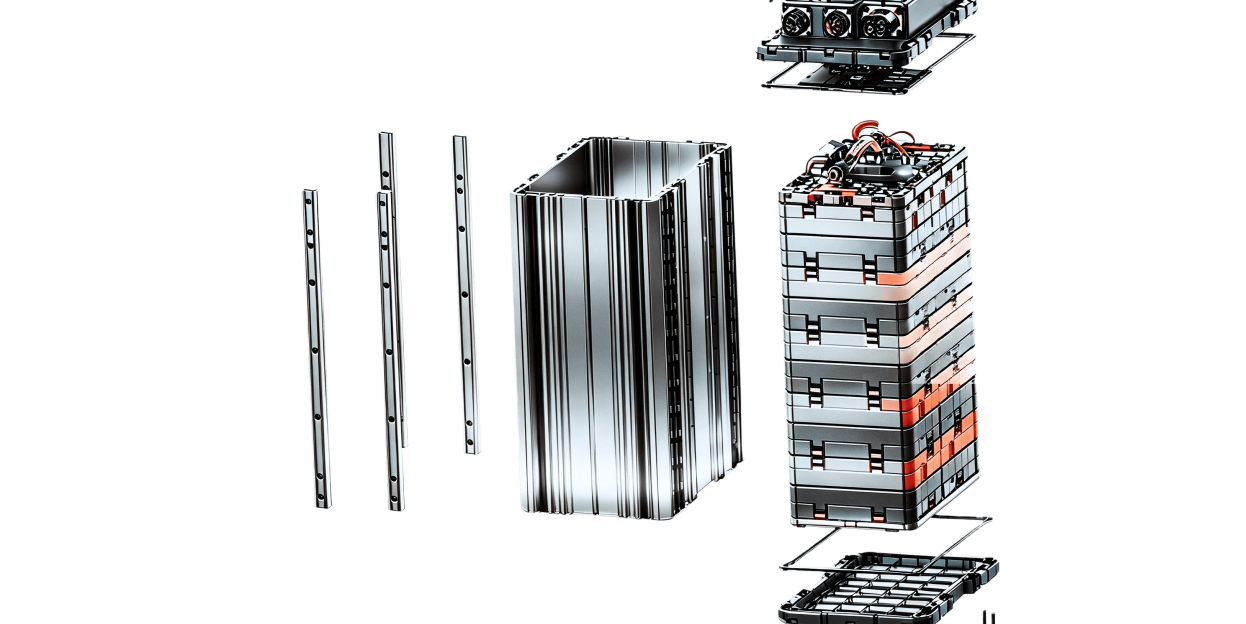
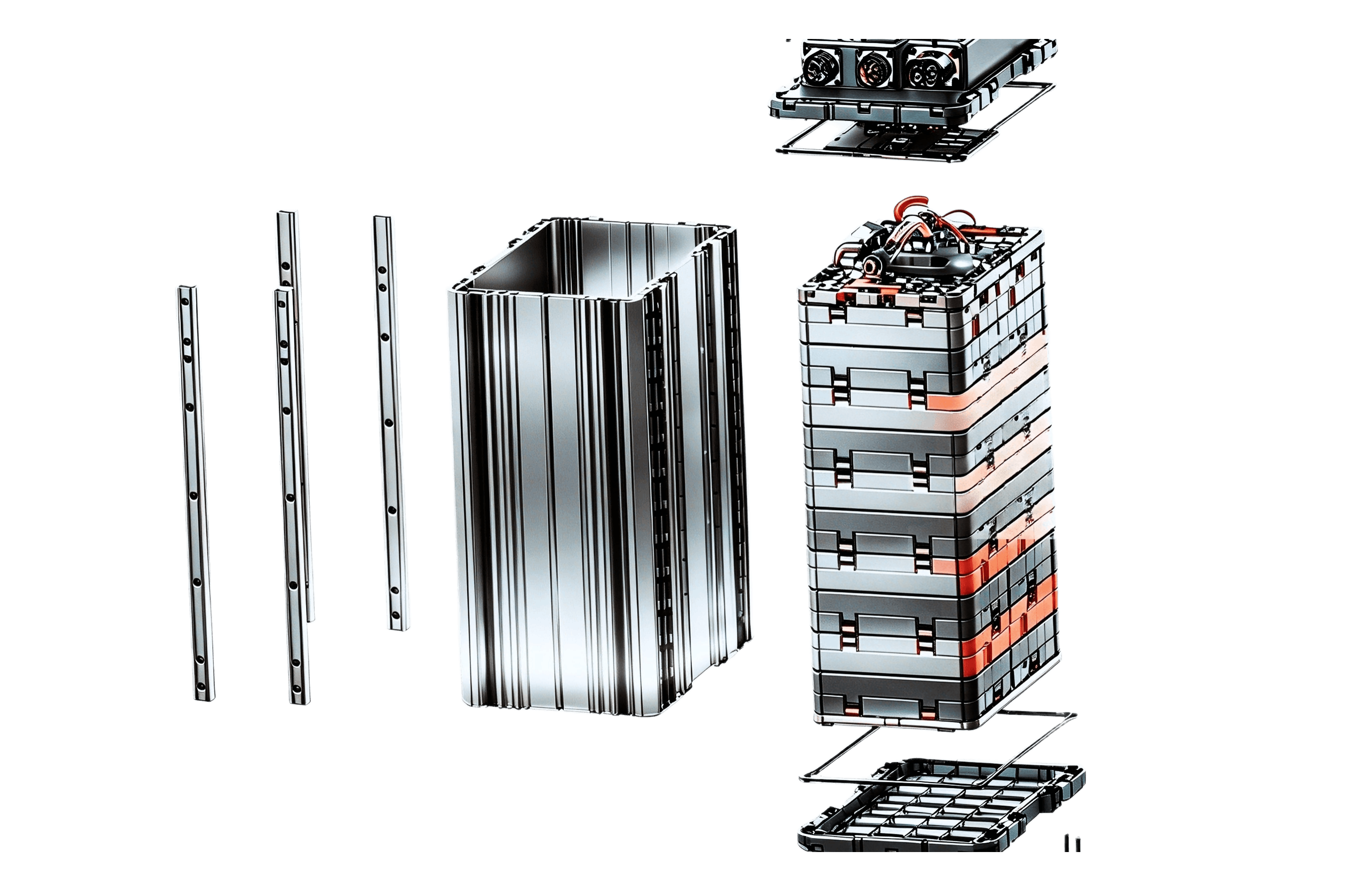
Exploded view of a custom lithium-ion battery pack showing its enclosure, stacked modules, and structural components.
Why Shouldn't OEMs Judge a Custom Battery Pack Manufacturer on Price and Samples Alone?
Because price and samples measure only the first delivery, not the years of supply that follow. A battery pack is designed into your product, certified with it, and serviced for its whole life. That gap matters because most battery program costs arrive after the sample is approved. Requalification after a cell change, tooling revisions, field returns and warranty claims all surface months after the price is agreed. For example, an OEM that saves on the quote can lose more when a redesign delays a seasonal launch.
Samples also reward the wrong skills. A supplier can hand-build one excellent unit with its most experienced engineers, yet lack the process control to repeat it. Therefore, judge the system that produces the pack, not the single pack on your desk.

Quadruped robot with four articulated legs illustrating a robotics application for battery packs.
Where Do Long-Term OEM Projects Usually Go Wrong?
They break at the handoff from prototype to mass production. For example, a pack passes every bench test, then the assembly line delivers low yield, shipments slip, and the OEM redesigns under deadline pressure. As a result, the cheapest quote becomes the most expensive project.
What a sample shows | What it hides |
Capacity and dimensions match on one unit | Pass rate and yield across production runs |
Bench safety tests passed | Process control and traceability |
A competitive unit price | Who pays for redesign, requalification and returns |
What Should a Battery Supplier Evaluation Framework Cover?
It should cover six dimensions: engineering, testing, quality, mass production, supply and lifecycle support. Each dimension exposes a different risk, so scoring only one leaves the rest unchecked.
Dimension | Question to ask |
Engineering | Which disciplines are in-house, and can the design survive a component change? |
Testing | Which standards does the lab test to, and can you see comparable reports? |
Quality | What checks exist from design to outgoing shipment? |
Mass production | What yield proves readiness for volume? |
Supply | How many sites can build your pack? |
Lifecycle | Who handles field returns, and for how many years? |
How Do You Assess a Battery Pack Manufacturer's Engineering and Testing Depth?
Ask to see the team, the design platform and the test evidence rather than the brochure. A capable custom battery engineering company covers electronics, software, mechanical and process roles under one roof and runs its own lab.
Transport safety is the first test to check. Nearly all lithium batteries must pass section 38.3 of the UN Manual of Tests and Criteria, which Intertek describes as a requirement for global market access. Ask for the UN 38.3 test summary of a comparable pack.
Regulation adds a deadline. From 18 February 2027, light means of transport (LMT) batteries, electric vehicle batteries and industrial batteries above 2 kWh need a battery passport under Regulation (EU) 2023/1542. Therefore, ask how the supplier will provide that data.
How Do You Verify Mass Production, Supply, and Lifecycle Support Capabilities?
Verify it with evidence of the prototype-to-volume path, not promises. Request the stage-gate plan, the pilot-run results and the yield target that must be met before mass production starts.
Next, test supply resilience. Multiple manufacturing sites can reduce geographic and logistical risks, but transferring production between facilities also depends on equipment compatibility, process validation, available capacity, and customer approval.
Finally, confirm lifecycle terms in writing: who handles field returns, how the response is measured, and how many years the support lasts.
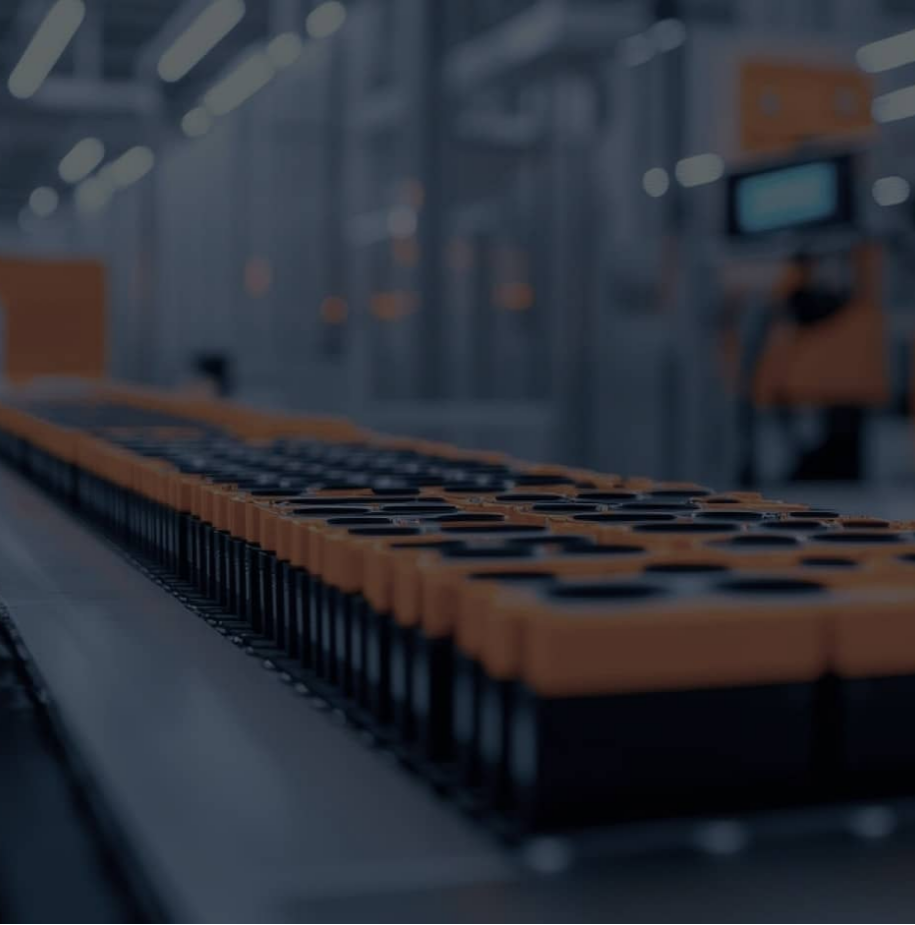
Battery modules arranged on a production line in a battery pack manufacturing facility
How Does SCUDPower Approach Custom Battery Pack Development?
Established in 2016, SCUDPower focuses on customized lithium-ion battery packs for applications including electric two-wheelers, robotics, power tools, and cleaning equipment. Its capabilities include structured project development, in-house testing, and manufacturing operations in Fuzhou and Vietnam, with an additional manufacturing facility planned in Poland.
Its DR0–DR5 development process puts verification before volume. DR3 covers prototype verification, DR4 covers mold samples plus reliability and certification testing, and DR5 runs small-scale production validation testing (PVT) to check pass rate and yield.
SCUDPower reports more than 200 interdisciplinary R&D engineers covering electronics, software, mechanical design, process engineering, design quality and testing. Its software platform is built so a microcontroller unit (MCU) or analog front end (AFE) can be replaced after mass production without redevelopment, which protects long-running programs.
The supporting infrastructure maps onto the remaining checklist dimensions, and the company website states the following:
· Testing: SCUDPower states that its testing center, established in 2018, covers at least 1,500 m² and has 1,000+ test channels and at least 150 pieces of equipment and tools. Its website also reports ISO/IEC 17025 qualification and testing against standards including GB/GB/T, UL, IEC and UN 38.3.
· Quality: SCUDPower describes an eight-phase quality management process covering R&D, product validation, mass production evaluation, supplier quality, incoming materials, manufacturing processes, outgoing inspection and after-sales quality management.
· Manufacturing and supply: SCUDPower lists 8 automatic and 27 semi-automatic battery-pack production lines at its Fuzhou facility. Its Vietnam factory was established in 2024, while a Poland factory is planned to be established in 2026.
· After-sales support: closed-loop handling of customer demands and returns based on 8D (Eight Disciplines) problem-solving, with service coverage in Southeast Asia, Europe, North America and Australia.
How Can You Turn the Checklist into a Supplier Scorecard?
Weight each dimension by the risk your product carries, then score every candidate against the same evidence. Weights differ by industry, so treat these percentages as illustrative starting points, not benchmarks.
Dimension | Micromobility | Robotics / AGV | Medical device |
Engineering | 15 | 25 | 15 |
Testing | 20 | 15 | 25 |
Quality | 15 | 15 | 30 |
Mass production | 25 | 15 | 10 |
Supply | 15 | 10 | 10 |
Lifecycle | 10 | 20 | 10 |
Total | 100 | 100 | 100 |
Score each dimension from 1 to 5, and give any claim without a document a 1. This keeps a persuasive sales call from outweighing a missing test report. (AGV stands for automated guided vehicle.)
What Should You Do Before Signing a Long-Term Battery Contract?
Compare evidence across all six dimensions before you compare prices. Then work through three steps with each shortlisted custom battery pack manufacturer:
1. Request the UN 38.3 test summary, stage-gate plan, yield data and lifecycle terms.
2. Score every candidate on the same weighted scorecard.
3. Hold a technical review with the engineers who would run your project.
If the answers stay specific under questioning, you are talking to a long-term partner rather than simply a low-price bidder.


How to Choose a Custom Battery Pack Manufacturer for a Long-Term OEM Project